Lime-Curdled Ricotta
Home-style acid-set ricotta made directly from whole milk (not the traditional Italian whey-recooking method, but the standard home approach).
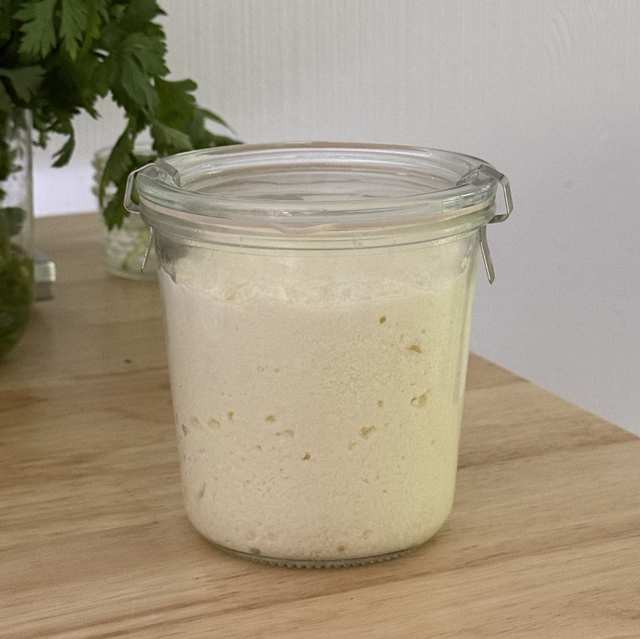
Ingredients
- Whole milk 1.8 qt (59 fl oz)
- Fresh lime juice ~4¾ Tbsp (~70g)
- Kosher salt (optional) Scant 2 tsp
Process
- Heat milk slowly over medium heat to 200°F, stirring occasionally.
- Remove from heat, stir in lime juice (and salt, if using) for 10–15 seconds, then stop.
- Let sit undisturbed 10 minutes to curdle.
- Line a strainer with a double layer of cheesecloth; scoop curds in with a slotted spoon.
- Drain at room temp: 10–15 min for loose/creamy, up to 60 min for firm/dry.
- Use fresh or refrigerate; best within 4–5 days.
Trial Log
Trial 01 — 2026-09-06
- Equipment
- Staub cast iron cocotte
- Milk
- Alexandre Eco Dairy pasture-raised A2/A2 organic 4% whole milk, 1.8 qt (59 fl oz)
- Heat
- Removed from heat at 197°F (vs. 200°F base)
- Acid
- Juice of 2.5 fresh limes, measured at 76g (vs. ~70g estimate)
- Salt
- Maldon salt, added pinch by pinch during straining rather than stirred in with the acid — testing whether unbroken flakes change taste/texture vs. dissolving salt earlier
- Straining
- Fine stainless steel sieve instead of cheesecloth
- Drain time
- 1 hour (interpreted as draining/straining time)
- Yield
- 290g strained; 456g after adding whey back into the container to keep it moist
Outcome
Phenomenal. Texture came out solid but light and creamy. Flavor was more salt-forward than muted — adding the Maldon pinch by pinch during straining, rather than dissolving it in earlier, made the salt read as present rather than blended in, and John could taste the difference. Recipe is confirmed as-is. Open question: how much whey to add back to the strained curds for moisture — this round used enough to bring 290g up to 456g, but the ideal ratio hasn't been dialed in yet.
Byproduct Uses
Leftover whey
- Swap it in for the water or milk in pancake or waffle batter — adds protein and a subtle tang.
- Use as the liquid in bread or pinsa dough instead of water; the acidity and protein give a better rise and a slightly tangier crumb.
- Cook grains (rice, quinoa, farro) in it instead of water for extra flavor and protein.
- Blend into smoothies for a protein boost — mild enough not to overpower fruit.
- Use to marinate chicken or pork; the acidity helps tenderize.
- Water acid-loving houseplants with it (diluted), or add it to the compost.