Your cart is currently empty!
Demand Not Included
My neighbor is CMO of a leading salmon producer. We spearfish together. One afternoon after a dive, he coined an acronym I haven’t stopped using since.
STAND
Sell To Accounts Not Distributors
It’s a foodservice expression. But the mistake it describes shows up everywhere.
Channel partners — distributors, resellers, retailers, marketplaces — are infrastructure. They move product. They don’t create desire for it. That’s your job, and you can’t outsource it.
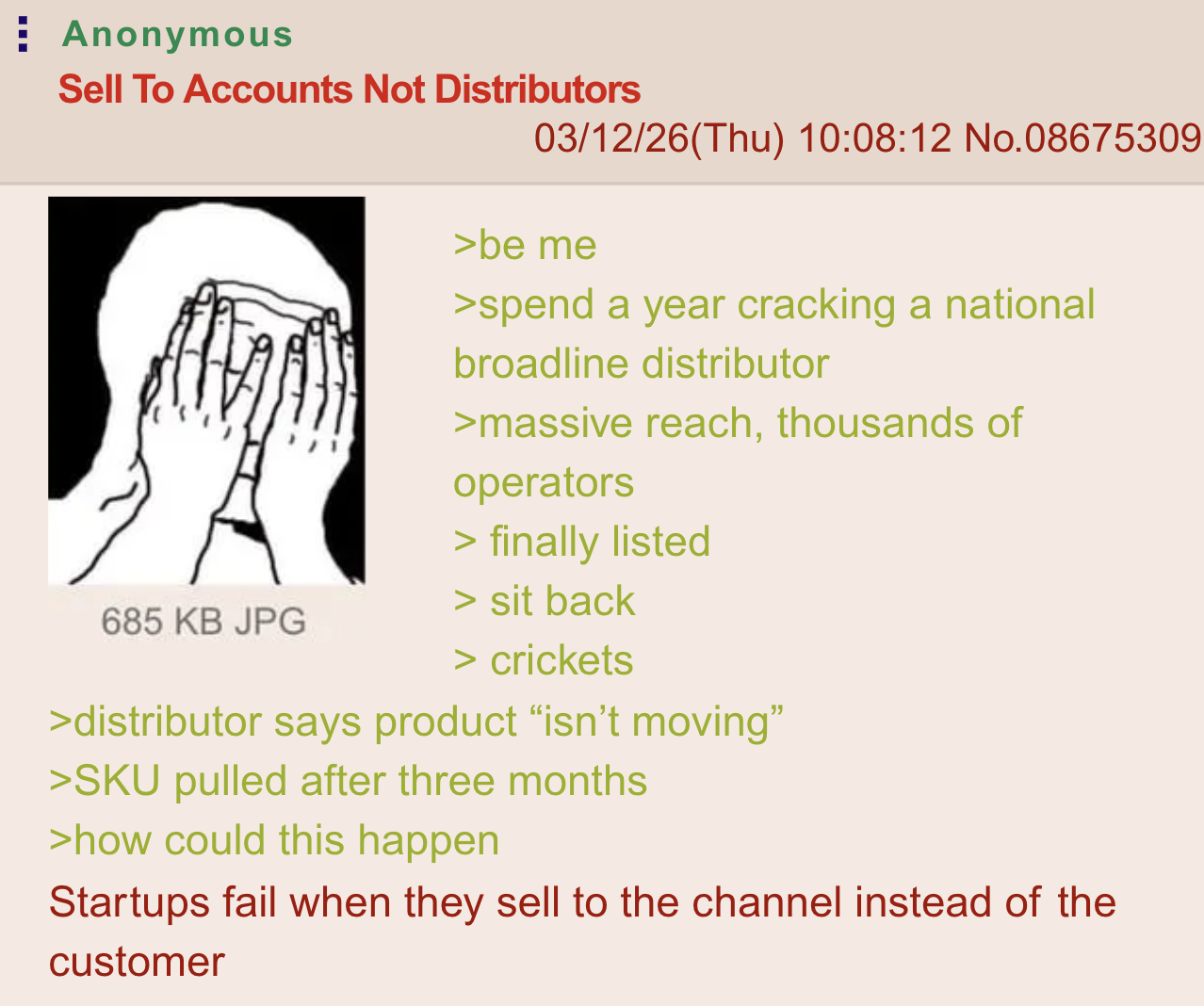
I’ve seen this play out in food startups more times than I can count. A brand lands a national broadline distributor. Thousands of restaurants suddenly have access to the product. Nothing moves. The brand blames the distributor. The distributor shrugs. The SKU gets pulled.
What went wrong? Nobody built demand at the operator level first. The chef didn’t know the product existed. The F&B director wasn’t asking for it. Without that pull, distributor reps — who pitch what’s easiest to sell — have no reason to push it.
The channel partner became the strategy. That’s the trap.

I now move truckloads of food with the largest broadline distributors in the country. That didn’t happen by selling to the distributor. It happened by understanding what motivates them — and working backward from there.
Distributor reps follow demand. They pitch what their best brokers are pushing, and brokers push what operators are already requesting. So the sequence matters:
Build demand with end customers first. Arm your channel partners with proof — case studies, sample kits, target lists. Then the distributor becomes a multiplier.
Flip that sequence and you’re just another SKU on a warehouse shelf. Nobody pitching it. Nobody asking for it.
This holds whether you’re selling frozen dough to restaurants, software through resellers, or consumer goods through a retailer. The channel amplifies demand. It doesn’t create it.
I spearfish because it demands patience and precision. You don’t chase the fish. You learn the reef — where they hold, what time of day, which structures they favor. You get in position before they arrive.
Same discipline applies here. Before you approach a channel partner, build pull at the end customer level. Understand their world. What problem are you actually solving? What does success look like for them — not for you?
Walk in with that knowledge and you’re not selling. You’re solving. Completely different conversation.
Pick five target customers. Get deep. Make them successful. Build case studies. Repeat.
Success will follow.
Building a business and trying to figure out channel strategy? I’m happy to compare notes. Reach out here.